A Month (learning about agents) in review
Tooling and models
- Added Zed to the stack: it does not eat up all my memory when I have multiple projects open as VS Code forks do.
- Goolge may have been nerfing their Gemini 3 Pro model, it is not as good as it used to be. At the same time Antigravity quotas for Opus seem to have decreased. My cheap inference days might be over.
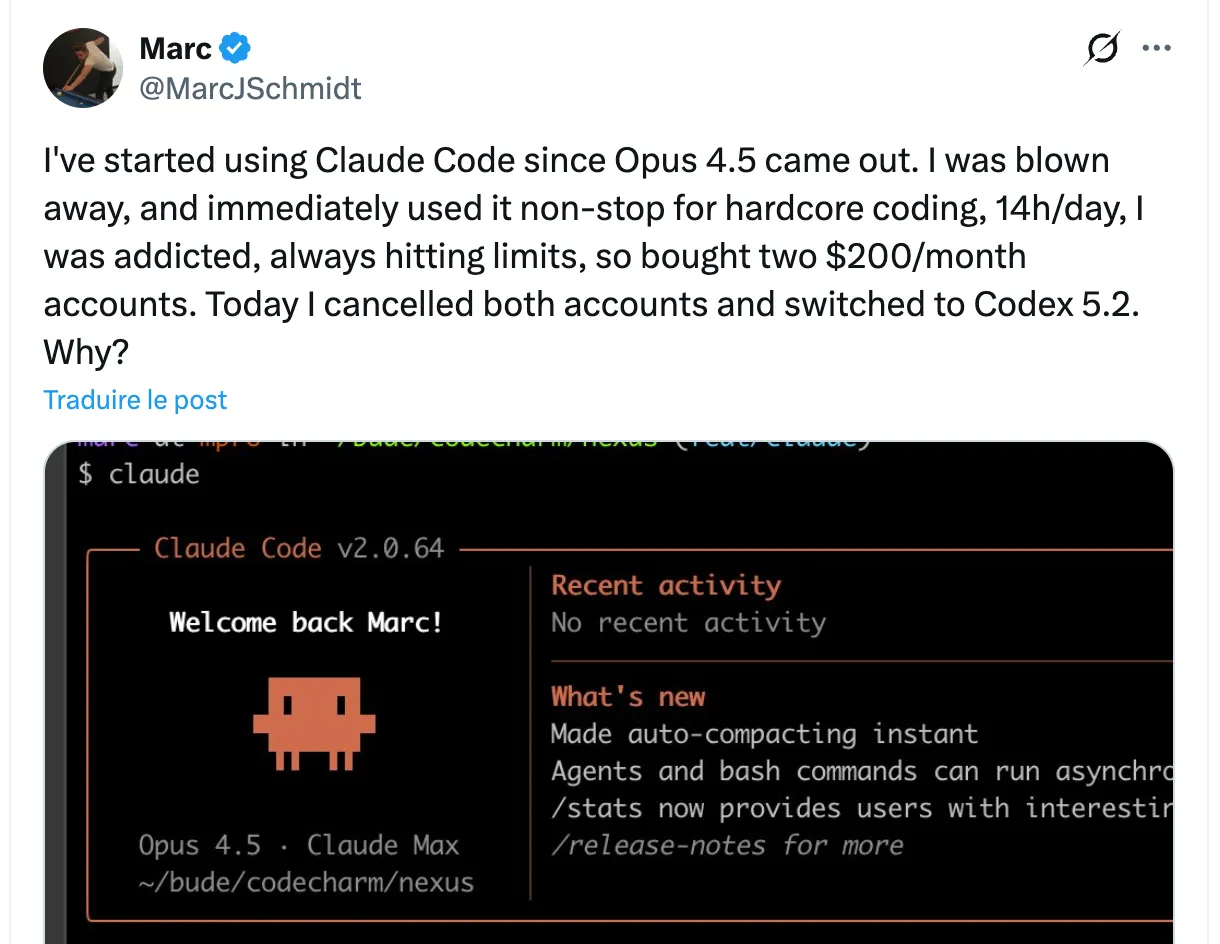
- Tempted to try out OpenAI models/codex, as my experience with Claude matches this one
Two skills finalized
I finalized two Claude Code skills that encode my own workflows:
- Spec-driven development skill. Encodes my flavor of spec-driven development: feature creation, folder numbering, spec writing (slices, test-first), and implementation principles. Spec and plan files serve as a record of research findings and decisions.
- Publishing skill. Handles the publishing pipeline for my website (meaningfool.github.io): from publishing an article (checking for frontmatter, fixing links and images if needed) to rebuilding the website (an Astro website with a Git submodule for the content).
Next steps: Skill development is likely to become important, and it’s still early stage. Nonetheless there are several opportunities to learn from the community about emerging patterns and best practices:
- Vercel agent-skills
- Upskill Agents - HuggingFace
- Skills are all you need
- @Sawyerhood browser-agent skill
Bookmarks enrichment pipeline
Goal: automate the process of enriching bookmarks with metadata and tags.
The workflow now:
- Capture: Use Karakeep’s browser extension to save links
- Enrich: A personal Typescript CLI connects to Karakeep’s API and processes each bookmark:
- Classifies the URL (tweet vs regular link)
- For tweets/X posts: fetches content via Bird CLI, generates visual tweet banners, grabs screenshots
- For regular links: fetches HTML content, converts to clean Markdown using Turndown, extracts summaries using the summarize CLI
- Updates bookmark metadata back into Karakeep
- Tag: AI-driven tagging using Gemini, but grounded in my own tagging taxonomy — not just whatever the AI comes up with.
- Automate: The whole thing runs on my Mac every 2 hours via a launchd daemon. Rate-limited for Twitter (5 tweets per run, 10s delays with jitter).
Next steps:
- Synchronize these enriched bookmarks with GitHub as a Git-based knowledge base
- Enable semantic search through the collection
- Allow Claude Code to access this knowledge, so I can query my bookmarks conversationally
Agent frameworks deep dive
I spent time understanding the landscape of agent frameworks and agentic architectures.
Frameworks explored:
- Claude Agent SDK — SDK-first approach, agent embeds in your code
- Pydantic AI SDK — orchestration library, app-in-control, protocol-first
- OpenCode — server-first/runtime approach, the loop is the default behavior
- LangGraph — graph-based agent orchestration
- Pydantic AI (the broader ecosystem)
Some early findings:
- Pydantic-like (orchestration library) vs Pi/OpenCode-like (agent runtime): the difference is where the loop lives and what the interface contract looks like. Orchestration libraries have the app call the LLM; runtimes act like an operator where the loop is the default behavior.
- Server-first vs SDK-first agent architecture: server-first means the agent runs as an independent service; SDK-first means the agent embeds in your code. Different trade-offs for deployment, control, and integration.
Next step: Produce a synthesized report on what I learned across all of this.
ClawdBot / MoltBot experimentation
- I dove into ClawdBot (now renamed MoltBot). I haven’t fully adopted it yet, but I ran some experiments.
- Deployed 2 instances: one on my Mac, another on Hetzner.
- It was the opportunity for my first ever PR to a public open-source project.
- This project poses obvious security risks:
Next steps:
- Check for security precautions and giving it access to more personal data/services.